The Executive Guide to Private Cloud Connectivity, DCI, and Cutting Cloud Egress Bills
Executive Summary
Private cloud connectivity replaces unpredictable public internet routing and high cloud data transfer fees with dedicated software defined circuits connecting your data centers, branches, and public clouds. By combining Network as a Service (NaaS), Data Center Interconnect (DCI), and zero egress storage, enterprises cut cloud networking spend by 50 to 74 percent. Call 469.436.3232.
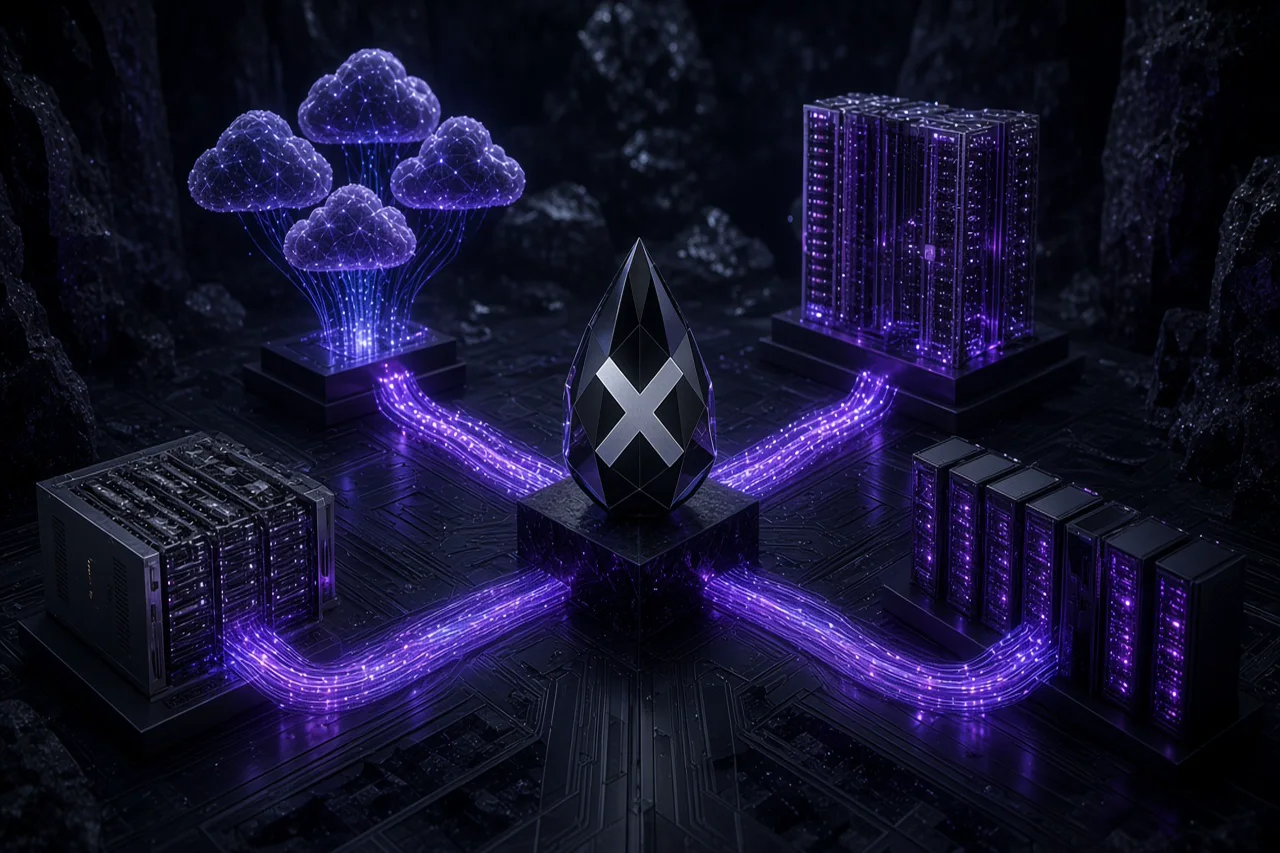
When a CEO, CFO, or VP of IT reviews a rising cloud invoice, the biggest surprise is rarely server compute. It is the hidden toll booth inside every major public cloud: data egress fees, NAT Gateway processing charges, and slow, unpredictable performance between data centers, branch offices, and AI compute environments. You do not need to be a network architect to fix the economics. You simply need to understand how private cloud connectivity works and where the leverage sits.
Why the Public Internet Is the Most Expensive Way to Connect Your Cloud
Most growing companies start by connecting their offices, colocation racks, and cloud accounts (AWS, Microsoft Azure, Google Cloud, or Oracle) over standard public internet VPNs. That approach is fast to set up on day one, but it creates three compounding business problems as your data volume grows:
- Punitive Cloud Egress Taxes: Moving data into AWS, Azure, or Google Cloud is free, but moving data out over the public internet costs $0.08 to $0.12 per gigabyte, plus another $0.045 per gigabyte if traffic passes through a standard cloud NAT Gateway.
- Unpredictable Performance and Jitter: Public internet traffic hops across multiple consumer and wholesale carrier networks with zero guarantee on latency or packet loss, which stalls database replication, ERP performance, and real time voice or AI applications.
- Expanded Attack Surface: Encrypted tunnels over the public internet still expose public IP endpoints to DDoS attacks and credential harvesting, whereas private circuits bypass the public internet entirely.
Explore the Obsidian X Cloud Connectivity and GPU Fabric Hub →
6 Acronyms Every Executive Should Know (Translated into Plain Business Terms)
Network engineers and carrier reps often bury simple commercial decisions under layers of acronyms. Here is what the six core building blocks actually mean for your P&L and risk profile:
- DIA (Dedicated Internet Access): A private fiber internet circuit reserved exclusively for your building with guaranteed symmetrical upload and download speeds and a contractual repair SLA, unlike shared coax or GPON fiber.
- DCI (Data Center Interconnect): A direct, private high speed lane (from 1 Gbps up to 400 Gbps) linking two or more data centers so your servers, colocation cages, and disaster recovery sites communicate as if they were in the same room.
- NaaS (Network as a Service): Software defined private networking (led by platforms like Megaport, Equinix Fabric, and PacketFabric) that lets you spin up private connections to AWS, Azure, Google Cloud, and 1,000+ enabled locations worldwide (including 634 enabled locations across 266 unique US physical data centers in the October 14, 2026 Megaport public locations API) in under 60 seconds instead of waiting 90 days for a traditional telco install.
- MCR (Megaport Cloud Router): A virtual router in the cloud fabric that lets your AWS account talk directly to your Azure or Google Cloud environment at up to 100 Gbps without buying physical router hardware or hauling traffic back to your office first.
- MVE (Megaport Virtual Edge): A virtual appliance that hosts your existing SD-WAN or firewall software (Cisco, Fortinet, Palo Alto Prisma, Versa, Aruba, or Velocloud) directly at the edge of a private global fiber backbone, bridging your branch offices into private cloud on ramps.
- BGP (Border Gateway Protocol): The traffic control system of the internet and private cloud networks; using BGP across two diverse circuits ensures that if one carrier fiber is cut by a backhoe, your business traffic shifts to the backup path automatically without dropping active sessions.
The 4 Levers That Cut Cloud and AI Infrastructure Costs by 30 to 70 Percent
1. Direct Cloud Interconnect Instead of Public Egress
Every major hyperscaler offers a private entryway: AWS Direct Connect, Azure ExpressRoute, Google Cloud Interconnect, and Oracle FastConnect. When you connect through these private on ramps via a NaaS fabric, the cloud providers immediately drop their outbound data transfer rates by 50 to 74 percent compared to public internet egress.
Explore Direct Cloud Interconnect, MCR, and Virtual Edge (MVE) →
2. Zero Egress Cloud Storage and Managed NAT Gateway
If your organization stores terabytes or petabytes of backups, video, compliance recordings, or AI training datasets in standard hyperscaler object storage, you pay every time your applications read or move that data. Pairing private connectivity with zero egress S3 compatible object storage (Wasabi Object Lock) or high performance NVMe AI storage (VAST Data up to 1 Tbps) eliminates egress, retrieval, and API call fees completely. Adding a fabric NAT Gateway cuts outbound NAT charges by 70 percent or more.
See How Zero Egress Storage and NAT Gateway Cut Cloud Bills →
3. Single Tenant Bare Metal GPU and CPU Compute
Running sustained AI inference, model fine tuning, or high throughput compute on hyperscaler virtual machines carries a steep markup. Through Megaport's integration of Latitude.sh across 24 data centers in 26 countries, engineering teams deploy single tenant bare metal CPU servers on demand in minutes to bridge 6 to 8 month OEM server supply chain delays, while dedicated multi node NVIDIA Blackwell B300, Hopper H200, H100, and L40S GPU clusters are scoped per workload with Megaport engineering. In addition, Megaport's Layer 2 AI Inference Cloud (marked Planned on Slide 22 of the October 2026 architecture roadmap) is designed to extend low latency inference endpoints directly onto the private Layer 2 fabric with sub millisecond adjacency to your cloud databases and zero egress storage.
Explore Bare Metal GPU and Latitude.sh AI Compute Fabric →
4. High Capacity Data Center Interconnect (DCI) and Local On Ramps
Whether your racks sit in Dallas Fort Worth (16 enabled facilities across Infomart, Equinix, Digital Realty, DataBank, Flexential, CyrusOne, Stack, and TierPoint), Houston (8 facilities), Southern California, or any of 1,000+ enabled locations worldwide (634 enabled locations across 266 unique US physical data centers in the October 14, 2026 Megaport public locations API), modern DCI lets you cross connect once and reach every major cloud and peer data center on a single optical port.
Explore Data Center Interconnect (DCI) and Texas On Ramps →
How Obsidian X Runs a Vendor Agnostic Cloud Connectivity Benchmark
If you call a single carrier or a single data center operator directly, they will only quote the fiber and ports they own. Obsidian X operates on your side of the table across 250+ vetted suppliers. We audit your current cloud egress bills, colocation cross connects, and WAN circuits, then benchmark Megaport, Equinix Fabric, PacketFabric, dark fiber, and carrier wavelengths side by side so you see the exact ROI before signing a contract.
Ready to see how much you can save on cloud egress, DCI, and AI infrastructure? Call us at 469.436.3232 or fill out our contact form for a free strategy consultation.