Logistics & Transportation
Networks That Move As Fast As Freight
Scanners, WMS, telematics, and dispatch all die when connectivity does. We engineer always-on infrastructure for warehouses, distribution centers, and multi-site 3PL footprints: the best circuit and failover path sourced competitively at every facility address, and RF coverage that keeps scanners connected on the floor.
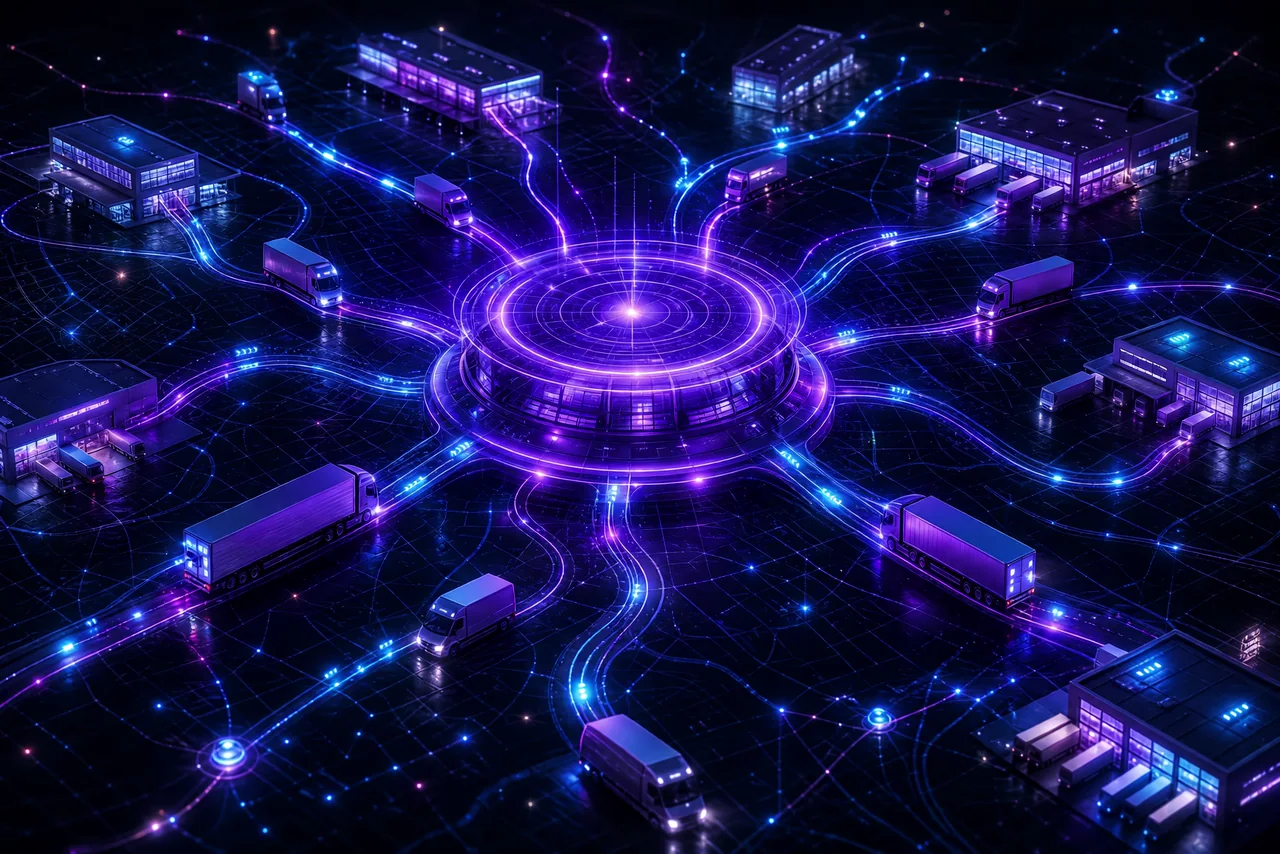
Logistics operations need reliable connectivity for WMS, RF scanning, telematics, and dispatch across facilities that often sit outside prime carrier footprints. ObsidianX sources connectivity vendor-agnostically from 250+ suppliers at each address, engineers SD-WAN failover so the dock keeps moving through any single carrier outage, and consolidates multi-site footprints onto one bill with one support path.
The problems we solve for logistics
Facilities in carrier dead zones
Warehouses and terminals sit where land is cheap, not where fiber is dense. Fiber builds to industrial addresses mean construction costs and long lead times, and finding real bandwidth there takes market breadth.
Downtime stops the dock
When the WMS drops, receiving stops, RF guns go quiet, pick paths stall, and trucks queue while SLA clocks keep running. Single-circuit facilities gamble with throughput, and cross-dock operations feel it within minutes.
Dispatch on aging phone systems
Drivers, dispatchers, brokers, and customers all need to connect instantly. Legacy PBXs and personal cell phones leave no record and no routing.
Sprawl of sites and invoices
Growth by acquisition and new facilities leaves a tangle of carriers, contracts, and rogue services nobody audits: every site with a different provider, a different invoice, and a different number to call at 2 a.m.
How ObsidianX delivers
SD-WAN failover for WMS, RF scanning, and yard operations
Dual-path SD-WAN with WMS and voice traffic prioritized, switching to a diverse second circuit in seconds. We also sanity-check the floor: Wi-Fi roaming that holds up on real forklift routes, not just in a lab.
Explore SD-WANMulti-site connectivity, one bill, one support path
Every carrier option pulled at each industrial address, including fixed wireless and 5G where fiber is absent, consolidated into a managed multi-carrier model with one invoice and one escalation path. For 3PLs opening client-dedicated buildings, the model scales per facility without renegotiating from scratch.
Explore Managed NetworksCCaaS for dispatch and customer service
Contact center platforms that route by intent, pop shipment records on inbound calls, record everything, and give dispatch and customer service real queues and analytics instead of a hunt group.
Explore Contact Center (CCaaS)AI for track and trace and scheduling
Virtual agents that answer where-is-my-shipment calls, book dock appointments, and cover after hours, deflecting the routine so your people handle exceptions.
Explore AI & AutomationAI on the Logistics Desk
AI that answers the calls freight generates
Every shipment generates calls: where is it, when does it deliver, which door does the driver use. The AI below is operational, not hype. It handles the routine, routes the rest, and escalates exceptions to your people.
Track and trace call handling
Where-is-my-shipment calls commonly run a quarter to 40 percent of inbound logistics support contacts by CX industry estimates, and spike at peak. AI agents answer them from live tracking data by voice, chat, or SMS, around the clock.
Dock appointment scheduling
Carriers book, move, and confirm dock appointments through self-service instead of phone tag. With driver detention costing trucking $15.1 billion in 2023 per ATRI research, faster scheduling and turnarounds are real money.
After-hours and overflow coverage
Freight moves at night. An AI agent answers when the desk is empty or the queue surges, follows your protocols, and hands anything unusual to on-call staff.
Dispatch support and routine deflection
Check calls, ETA requests, and status updates get answered automatically so dispatchers work exceptions, not repeats. Summaries land in the TMS or CRM through EDI and API integrations.
Frequently Asked Questions
What logistics leaders ask us most, answered directly.
How do I get reliable internet at a warehouse with no fiber?
Industrial addresses often have more options than the incumbent quotes suggest: competitive fiber builds, fixed wireless, licensed microwave, and 5G business internet. ObsidianX pulls availability from 250+ suppliers at the specific address and engineers a primary plus failover design from what is actually there. For new facility openings we start the connectivity clock early: industrial fiber builds can take a quarter or more, and a fixed wireless or 5G path can carry go-live day while construction finishes.
What happens to our WMS and scanning when the primary circuit fails?
Without failover, receiving and picking stop with it. SD-WAN with a diverse second path (wired or 5G) switches traffic automatically in seconds, keeping RF guns scanning and the dock moving. We design failover sized for your WMS and scanning traffic specifically, and we validate that Wi-Fi roaming holds up on real forklift routes.
How do multi-site logistics operators consolidate carriers and invoices?
Inventory every circuit and service, audit invoices for billing errors and orphaned lines, benchmark rates against the market, then consolidate under a managed multi-carrier agreement: one bill, one support path, one escalation number for every facility. Multi-facility operators typically recover 15 to 30 percent, funding upgrades like failover from savings.
What do UCaaS and CCaaS realistically cost for a logistics operation?
Real-world negotiated mid-market UCaaS deals typically land at $15 to $27 per seat per month depending on volume, term, and licensing. CCaaS for dispatch and customer service teams runs higher, typically $50 to $150 and up per agent per month depending on features and AI capabilities, so we right-size the platform to the desk that actually needs it and bid both across 250+ suppliers.
Can dispatch phone systems integrate with our TMS?
Modern UCaaS and CCaaS platforms integrate with major TMS and CRM systems via APIs, popping shipment records on inbound calls and logging interactions automatically. We shortlist platforms by integration fit with your specific stack.
Can AI really handle track-and-trace and scheduling calls?
Yes, within clear guardrails: agents connected to live tracking and dock calendars answer status and booking calls by voice, chat, and SMS, and anything unusual escalates to a person. The practical wins are around-the-clock coverage and shorter queues, not replacing your customer service team. We source and vet the platforms, and integration fit with your WMS and TMS decides the shortlist.
Ready for Infrastructure That Keeps Freight Moving?
Get a free assessment of connectivity, failover, and telecom spend across your facilities, from the circuit into the building to the RF coverage on the floor.
Vendor-agnostic advice. No quotas, no obligation, no pressure.