Retail
Every Store Online, Every Transaction Secure
When the network is down, the register is closed. We build multi-location retail connectivity that keeps POS, inventory, and guest Wi-Fi running at every store, plus the retail contact center and practical AI that answer order status, returns, and store calls. One invoice, one number to call.
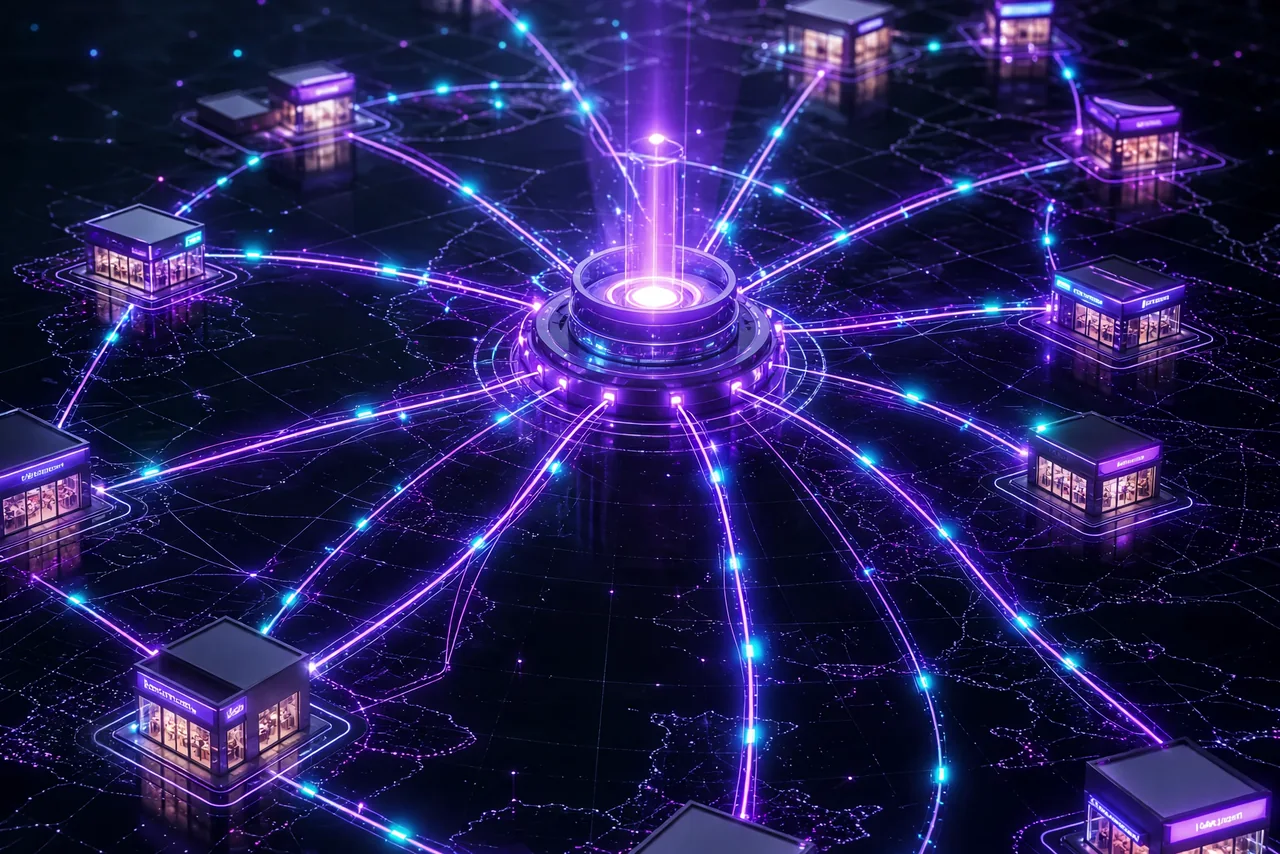
Retailers need PCI-aware networks that keep point-of-sale online at every location, plus omnichannel customer contact and practical AI for order status, returns, and pickup scheduling. ObsidianX sources store connectivity, SD-WAN, UCaaS, CCaaS, and AI automation vendor-agnostically from 250+ suppliers, consolidating every store onto one managed platform and invoice.
The problems we solve for retail
Downtime closes registers
A single-circuit store loses transactions, loyalty lookups, and e-commerce pickup workflows the moment its connection blips.
PCI compliance across every site
Cardholder data flows through every location, and the PCI DSS 4.0.1 requirements that used to be future dated are now fully enforceable. Inconsistent network segmentation and aging firewalls multiply audit risk by store count.
POTS lines bleeding budget
Copper lines for fire alarms, elevators, and fax machines now cost hundreds per site per month. Carriers have stopped taking new copper orders, and they publish retirement dates per wire center, so each store runs on its own clock.
Carrier chaos at scale
Fifty stores can mean a dozen carriers, a drawer of invoices, and no single view of what anything costs or whether it works.
Customer contact friction
Store phones ring unanswered at rush, order status and returns queues back up, and peak season multiplies contact volume. Every missed contact is a sale or a save lost.
How ObsidianX delivers
Store connectivity and guest Wi-Fi
Best-available circuits sourced per address, secure segmented Wi-Fi for guests and operations, and 24/7 monitoring across the fleet.
Explore Managed NetworksSD-WAN failover for POS uptime
Automatic failover to diverse paths keeps registers, pickup, and inventory systems online through any single-circuit failure.
Explore SD-WANCCaaS for retail customer contact
One omnichannel queue across voice, chat, and messaging, routed by intent between stores and the contact center, with capacity that flexes for peak season and CRM and order-system integration that puts the order on screen before anyone says hello.
Explore Contact Center (CCaaS)AI for order status, returns, and scheduling
Virtual agents answer where-is-my-order calls from live order data, take returns intake, book pickups and appointments, and cover after hours, deflecting the routine so your team handles exceptions.
Explore AI & AutomationPOTS replacement and bill cleanup
Wireless replacements for alarm, elevator, and fax lines commonly save up to 60 percent per line, with UL/NFPA compliance for life-safety systems.
Explore POTS ReplacementAI on the Retail Front Line
AI that answers the contacts retail generates
Every order generates contacts: where is it, how do I return it, when can I pick it up. The AI below is operational, not hype. It handles the routine, and your people handle exceptions, VIP customers, and anything that needs judgment.
Order status and WISMO deflection
Where-is-my-order questions commonly run 25 to 40 percent of inbound retail support volume by industry estimates, and pass half at peak. AI agents answer them from live order data by voice, chat, and SMS, around the clock.
Returns and exchange intake
US retailers were projected to take back $849.9 billion in merchandise in 2025, about 15.8 percent of sales per NRF research. AI handles the intake: eligibility, labels, status, and exchange options, with policy exceptions routed to a person.
Pickup and appointment scheduling
Roughly one in ten US e-commerce dollars now moves through click-and-collect per eMarketer forecasts. AI confirms orders are ready, books pickup windows and service appointments, and makes sure the customer in the parking lot reaches someone.
After-hours and peak overflow
Holiday queues surge right when hiring is hardest. An AI agent answers when the desk is closed or the queue spikes, follows your protocols, and hands anything unusual to on-call staff with full context.
Routine FAQ and policy deflection
Hours, locations, stock checks, gift cards, and policy questions get answered automatically. In Gartner's April 2026 survey of 321 service and support leaders, 85 percent said they are expanding the responsibilities of human agents as AI absorbs routine volume, and that is exactly how we scope it.
Compliance
PCI-DSS across the whole fleet
We design segmented store networks that isolate cardholder data environments, recommend PCI-aware POS connectivity, and standardize firewall and access policies across locations. With PCI DSS 4.0.1 now fully enforceable, segmentation that shrinks audit scope is worth real money, and compliance scales with the store count instead of fighting it.
Frequently Asked Questions
What retail leaders ask us most, answered directly.
How do multi-location retailers keep POS online during circuit failures?
Deploy SD-WAN with automatic failover to a second path, ideally a diverse wired circuit or LTE/5G backup. The switchover happens in seconds, so transactions continue. ObsidianX engineers per-store failover and validates carrier diversity at each address, because two circuits that share a pole are not diverse.
What does PCI-aware network design mean for store connectivity and guest Wi-Fi?
PCI DSS does not mandate segmentation, but an unsegmented store network puts everything in audit scope. PCI-aware design isolates the cardholder data environment on dedicated VLANs and firewall policies, keeps guest Wi-Fi and back-office traffic out of scope, and documents and tests that separation as PCI DSS 4.0.1 requires. Done correctly, guest Wi-Fi adds marketing value without expanding scope.
How does CCaaS help retail teams with order status, returns, and peak volume?
A retail contact center platform unifies voice, chat, and messaging in one queue, routed by intent, so order status and returns land with the right people with the order record already on screen. Store calls overflow to the contact center instead of ringing out at rush, and capacity flexes up for peak and back down after, instead of staffing January like December. Recording and analytics show what customers actually ask.
Can AI support retail customer service without replacing the store team?
Yes, and that is the point. AI agents answer the routine around the clock: order status, returns intake, pickup confirmations, hours, and stock checks. Exceptions, VIP customers, and judgment calls escalate to your people with full conversation context. We scope AI to absorb routine volume so your team spends its time where judgment actually matters.
What do UCaaS and CCaaS realistically cost for a retailer?
Real-world negotiated mid-market UCaaS deals typically land at $15 to $27 per seat per month depending on volume, term, and licensing. CCaaS runs higher, typically $50 to $150 and up per agent per month depending on features and AI capabilities, so we right-size seats to the desks that need them and bid both across 250+ suppliers. Consolidating store telecom onto one managed agreement typically recovers 15 to 30 percent along the way.
What is POTS replacement and why do retailers need it now?
Carriers are sunsetting copper phone lines and raising prices sharply, often 10 to 30 percent a year. POTS replacement moves fire alarms, elevator phones, and store lines to wireless solutions that meet UL and NFPA requirements, commonly saving up to 60 percent per line across a store fleet. Inventory your copper before the retirement notice arrives.
Ready to Unify Your Store Technology?
Get a free multi-location assessment covering connectivity, POS uptime, POTS lines, customer contact, and total telecom spend.
Vendor-agnostic advice. No quotas, no obligation, no pressure.