Real Estate & Property Management
One Portfolio, One Technology Partner
Every property in your portfolio has circuits, phone lines, life-safety systems, and tenants who expect connectivity. We manage portfolio-wide technology as one estate: sourced competitively, billed on one invoice, supported by a named engineer. A property in Houston gets treated the same as every other address in the portfolio. And because occupancy starts with an answered phone, we build the leasing operations, resident services, and practical AI that pick up every call.
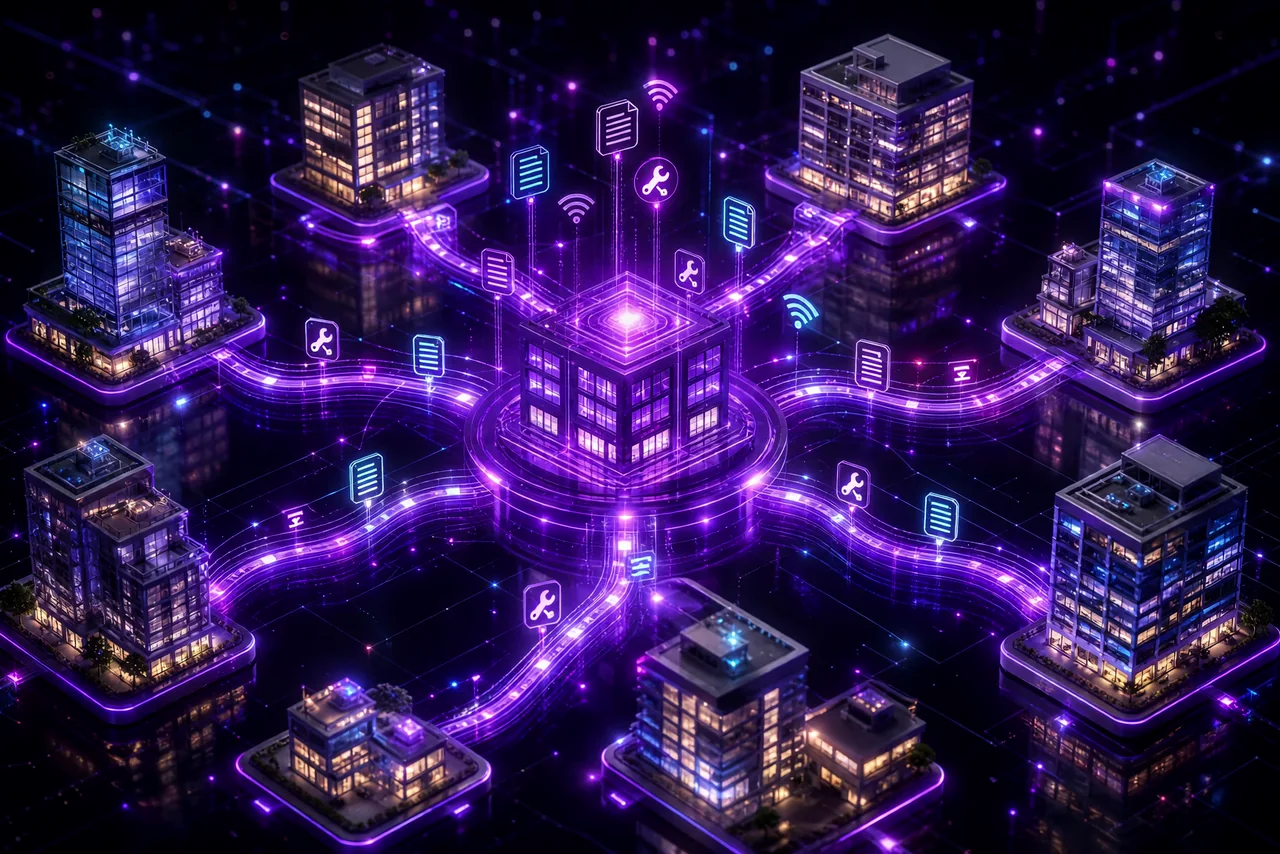
Property managers and real estate firms need reliable connectivity at every building, compliant elevator and fire alarm lines, leasing and resident communications that answer every call, and clean intake for maintenance requests. ObsidianX sources portfolio-wide telecom, CCaaS, and practical AI vendor-agnostically from 250+ suppliers, consolidating every property onto a single managed invoice.
The problems we solve for real estate
POTS costs compounding per building
Elevator phones, fire panels, gate call boxes, and pool phones still run on copper at hundreds per property per month. AT&T stopped taking new copper orders in October 2025, and carriers now publish retirement dates per wire center, so each property runs on its own clock rather than a national one.
Every building, a different carrier
Portfolios accumulate a patchwork of providers, contracts, and invoices no one fully tracks, especially after acquisitions.
Leasing teams missing calls
Prospective tenant calls that go unanswered become someone else's lease. In a 2024 Rent. survey, more than three quarters of leasing teams said they miss leads simply because staff are pulled in too many directions.
Tenant connectivity expectations
Ninety percent of renters say they are interested in or will not rent without high-speed internet, per the 2024 NMHC and Grace Hill survey of 170,000+ renters. Buildings that cannot deliver it lose leases.
Fragmented multi-property communications
Each building answers the phone its own way: different greetings, different routing, different after-hours habits. Prospects and residents feel the inconsistency, and there is no single support path when something breaks.
After-hours and conversion nobody can see
After-hours leasing and maintenance calls get improvised, and nobody can say what the answer rate is, how many tours got booked, or which campaigns produced signed leases. What is not measured cannot be improved.
How ObsidianX delivers
Leasing and management communications
Cloud phones with call routing, tracking, and mobile apps for leasing offices, maintenance teams, and regional managers, with the same greeting and menu at every property.
Explore Business Phone SystemsCCaaS for leasing, residents, and maintenance intake
Queues routed by intent so leasing inquiries, resident requests, and maintenance calls land with the right team, overflow between properties and a central desk, after-hours coverage, and call tracking that ties campaigns to signed leases.
Explore Contact Center (CCaaS)AI for leasing and resident coordination
Virtual agents that answer leasing inquiries, book tours against real calendars, triage maintenance requests by urgency, and cover after hours. People handle exceptions, sensitive resident issues, and judgment calls.
Explore AI & AutomationBuilding and amenity connectivity
Best-available circuits sourced per address, community and amenity Wi-Fi with honest economics on bulk versus amenity models, and portfolio-wide monitoring on one invoice.
Explore Bulk InternetPOTS replacement across the portfolio
Migrate elevator, fire panel, gate, and pool lines to wireless replacements that meet ASME A17.1 and NFPA 72 requirements when properly specified, commonly saving up to 60 percent per line at every property.
Explore POTS ReplacementMulti-property network management
Centralized SD-WAN management for portfolios, keeping access control, cameras, and building systems online through outages.
Explore SD-WANAI on the Leasing Line
AI that answers while your team runs the property
The operational cases are real and the boundary is firm: AI handles routine leasing and resident coordination, and people handle exceptions, sensitive resident issues, and judgment calls. Fair housing obligations stay with the operator, so we vet tools for consistent answers, clean escalation, and full conversation logs.
Leasing inquiry intake and tour scheduling
Voice and chat agents answer availability and pricing questions consistently, qualify the basics, and book tours against real calendars, writing everything back to the systems your teams already use.
Maintenance request triage
Water where it should not be, no heat, or a stuck gate gets classified as urgent and escalated to on-call staff with the unit, the problem, and a transcript. Routine requests become clean tickets instead of voicemails.
After-hours and overflow coverage
An AI agent answers when the leasing office is closed or every line is busy, follows your protocols, and never lets a prospect ring out to the next community on the list.
Routine resident FAQ deflection
Office hours, amenity bookings, payment portal directions, and move-in logistics get answered instantly, so your site teams work the requests that need a person.
Missed-call follow-up
Callers who hang up get a text back with a booking link, and unanswered inquiries get flagged for callback instead of disappearing into voicemail.
Frequently Asked Questions
What real estate leaders ask us most, answered directly.
What should a property management company look for in a phone system?
Call routing that works across buildings, recording and tracking, mobile apps for site and regional staff, and integration with the property management software you already run. The right platform depends on portfolio size and stack; ObsidianX runs multiple suppliers through a competitive process, including the honest question of when your PM software's built-in tools are enough and when independent platforms win.
How do property managers replace elevator and fire alarm phone lines?
Cellular-based POTS replacement devices provide code-compliant connectivity for elevator phones (ASME A17.1) and fire panels (NFPA 72) when properly specified, with battery backup and monitoring. Replacements typically cut per-line costs up to 60 percent while improving reliability over degrading copper.
How does CCaaS help with leasing, resident services, and maintenance intake?
One queue across voice, chat, and text with routing by intent, so leasing calls reach someone who can book a tour and maintenance calls become tickets with the right urgency. Calls overflow between properties and a central desk instead of ringing out, after-hours coverage is designed rather than improvised, and tracking ties every call, recording, and outcome back to the campaign that generated it, so you can see which marketing produces signed leases.
Can AI support leasing and residents without replacing site teams?
Yes, that is the design. AI answers routine inquiries, books tours, and triages maintenance around the clock; your people keep exceptions, sensitive resident situations, and judgment calls. Because fair housing obligations stay with the operator, we vet tools that answer every prospect consistently, escalate accessibility and assistance questions to a person, and keep full logs. Cross-industry research published in Harvard Business Review found firms responding within an hour were about seven times more likely to qualify a lead, and nearly a quarter never responded at all.
What do multi-property operators need from connectivity and communications?
One platform and one support path: centralized administration, consistent greetings and routing at every building, shared overflow, failover connectivity per site, and consolidated billing. With an established portfolio standard, a newly acquired property can typically be audited, transitioned, and consolidated within 30 to 60 days, including reviewing inherited contracts for savings and early termination exposure. Consolidation typically recovers 15 to 30 percent of telecom spend.
What do UCaaS and CCaaS realistically cost for a property management company?
Real-world negotiated mid-market UCaaS deals typically land at $15 to $27 per seat per month depending on volume, term, and licensing. CCaaS runs higher, typically $50 to $150 and up per agent per month depending on features and AI capabilities, so most operators put CCaaS seats on the leasing and resident service desks and keep site staff on standard seats. We bid both across 250+ suppliers and right-size before we negotiate.
Ready to Treat Your Portfolio Like One Estate?
Get a free portfolio telecom audit: every property, every line, every contract, plus how your leasing and resident calls actually get answered.
Vendor-agnostic advice. No quotas, no obligation, no pressure.