July 10, 2026 · Brandon Stone, Managing Partner
SASE vs Traditional VPN: What Changed for Distributed Teams
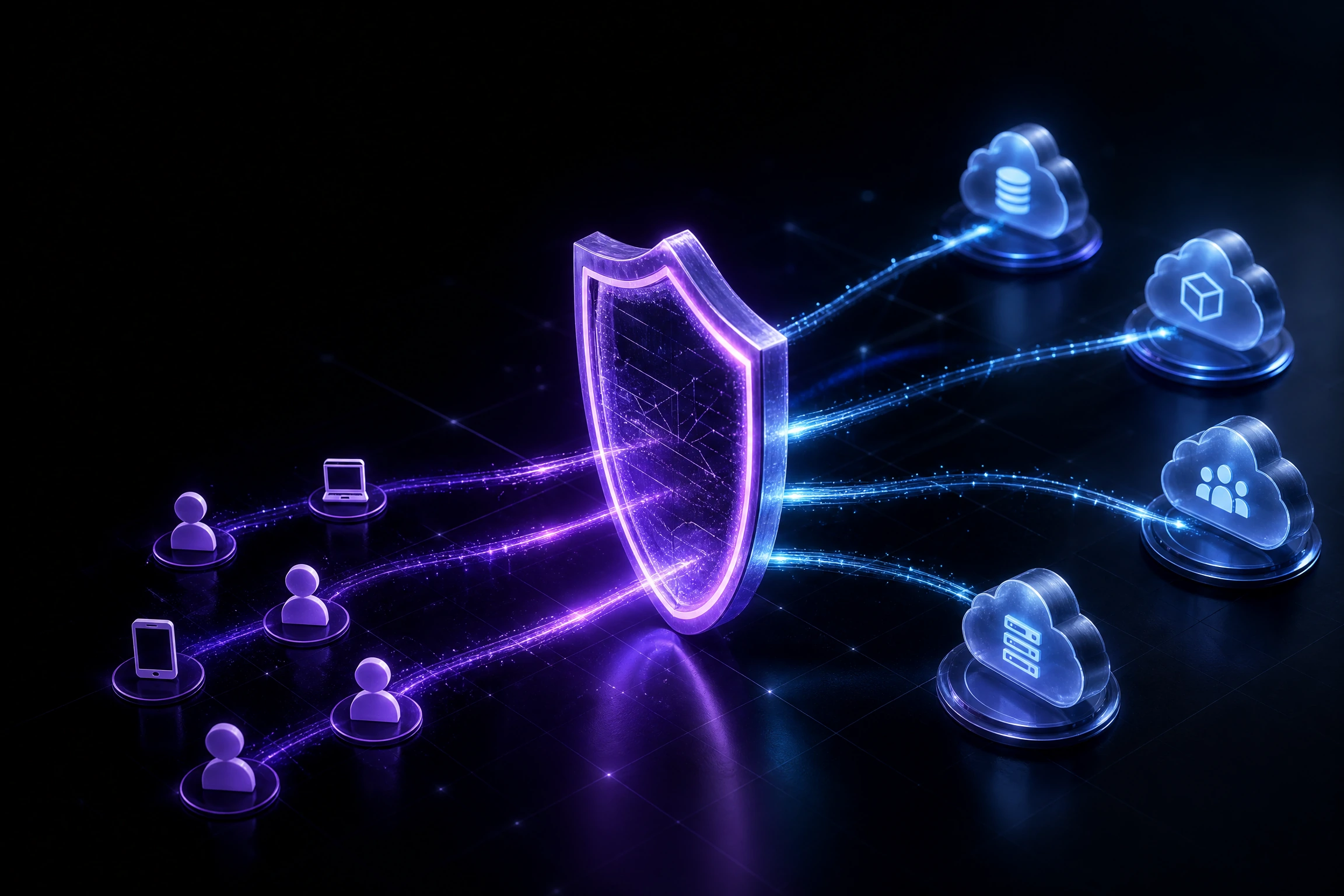
For two decades, the VPN was the default answer to remote access: authenticate once, tunnel into the corporate network, and trust everything on the other side. That model was built for an office-centric world, where most applications lived in a data center and most employees worked from a desk behind a firewall. Neither of those things is true anymore.
SASE (Secure Access Service Edge) is the architecture that replaced that assumption. Instead of tunneling users into a network, SASE verifies identity and device posture for every session and grants access only to the specific application requested, not the whole network.
How a Traditional VPN Works
A VPN concentrator sits at the network edge. Once a user authenticates, they are placed on the network as if they were plugged in at the office. That is convenient, but it also means a compromised laptop or a stolen credential can move laterally across everything the network touches.
- Trust is granted once, at login, for the whole session
- Users are placed on the network, not scoped to an application
- Performance depends on backhauling traffic through a central concentrator
- Scaling to more remote users means scaling concentrator hardware
How SASE Is Different
SASE converges networking and security into a single cloud-native service. It verifies every user and device before granting access to anything, and it scopes that access to individual applications instead of the whole network.
- Continuous identity and device verification, not a one-time login
- Access scoped to the specific application, not the network
- Inspection happens at the cloud edge closest to the user, improving performance
- Scales by adding users in software, not by adding concentrator hardware
Do You Need SASE if You Already Have a Firewall and VPN?
If your workforce and applications have left the office, the perimeter your firewall protects no longer matches reality. That is the core case for SASE: it moves inspection and access control to the cloud so protection follows the user and the application, not a building. For most distributed teams, SASE and zero trust network access (ZTNA) replace the aging VPN outright rather than sitting alongside it.
Making the Move
SASE is not a single product; it is delivered by a range of vendors with different strengths depending on your existing network, compliance requirements, and budget. As a vendor-agnostic consultant, ObsidianX evaluates your current VPN and firewall setup, matches you to the SASE platform that fits your environment, and manages the transition so users are not left without access mid-migration.
Ready to retire your VPN concentrator?
Contact ObsidianX for a free zero trust readiness assessment. Call 469.436.3232 or fill out our contact form.
Want Google to show you more of our answers?
Add ObsidianX as a preferred source and our guides get priority in your Google and AI Overview results. One click, one checkbox.